
Montessori From the Start: Top Five
July 7, 2018
Day 2
The Toddler Work Shelf: Top Five
So you've carved out a nook in the living room and set up your shelf. What comes next?I do encourage you to select a few Montessori materials as an introduction for your child. Their addition to the shelf will naturally invite curiosity and the works are carefully designed to be just that. They are simple and purposeful - and are decidedly not toys.
DO make sure that your child is gently guided to roll out a work mat, bring each item, one at a time to the mat, and then return it to the shelf when finished. This cycle of activity is just as important as the work itself in terms of building a young child's executive function skills, including initiation, planning, sequencing steps of a task, focus, impulse control and goal-directed persistence.
DON'T become over-involved in your child's work. This space is your child's and as a space needs to be respected. Once your child is set up with a chosen work, busy yourself if possible with your own work. There is no need to jump in when your child is struggling. Let them exert effort and build stamina. If they begin to show frustration by shoving or banging materials, gently suggest that it might be time to make a new choice. When they do complete a task successfully you can of course notice but try not to praise. They should be seeking their own internal satisfaction rather than yours!
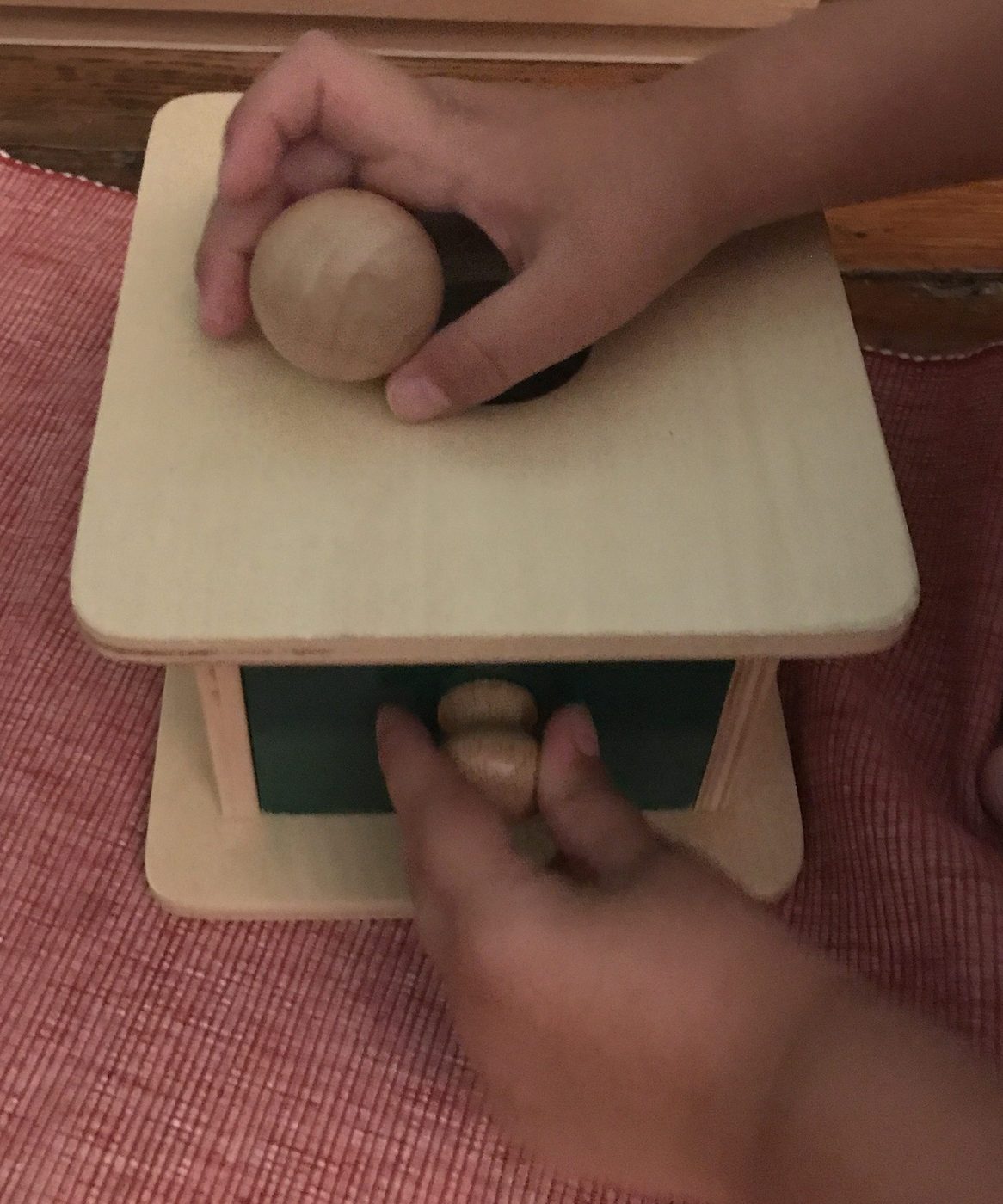
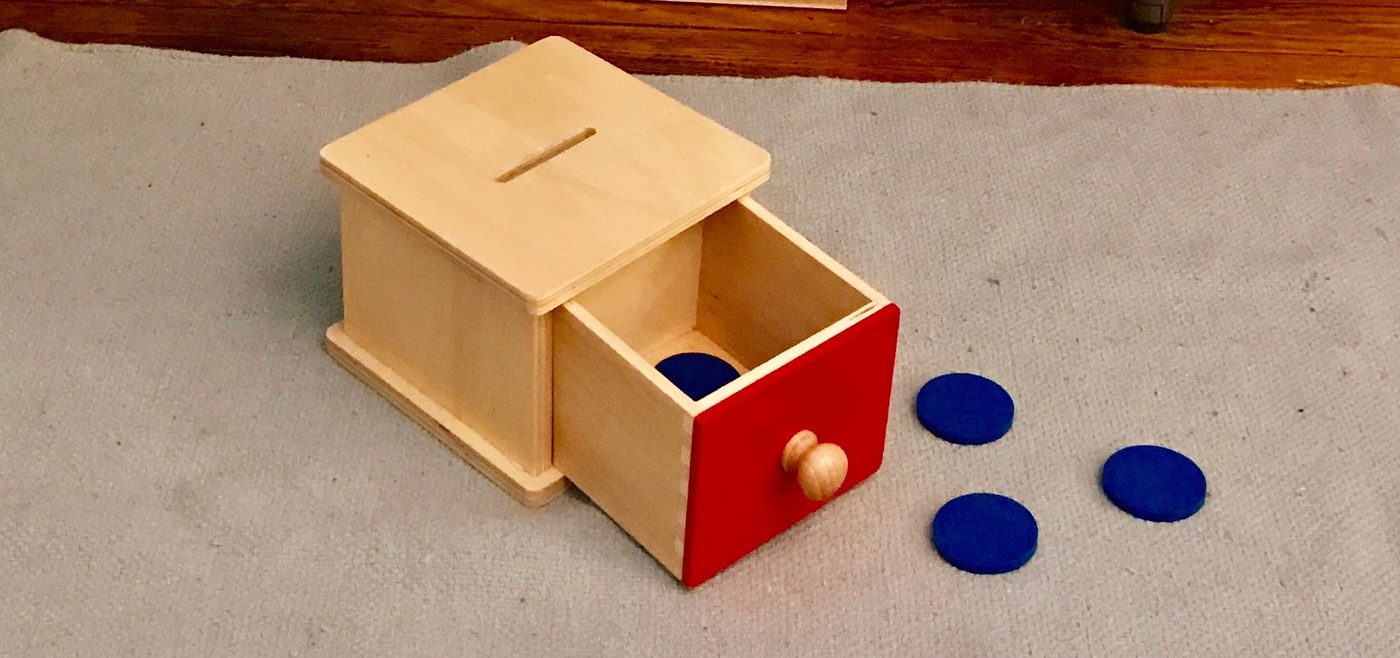
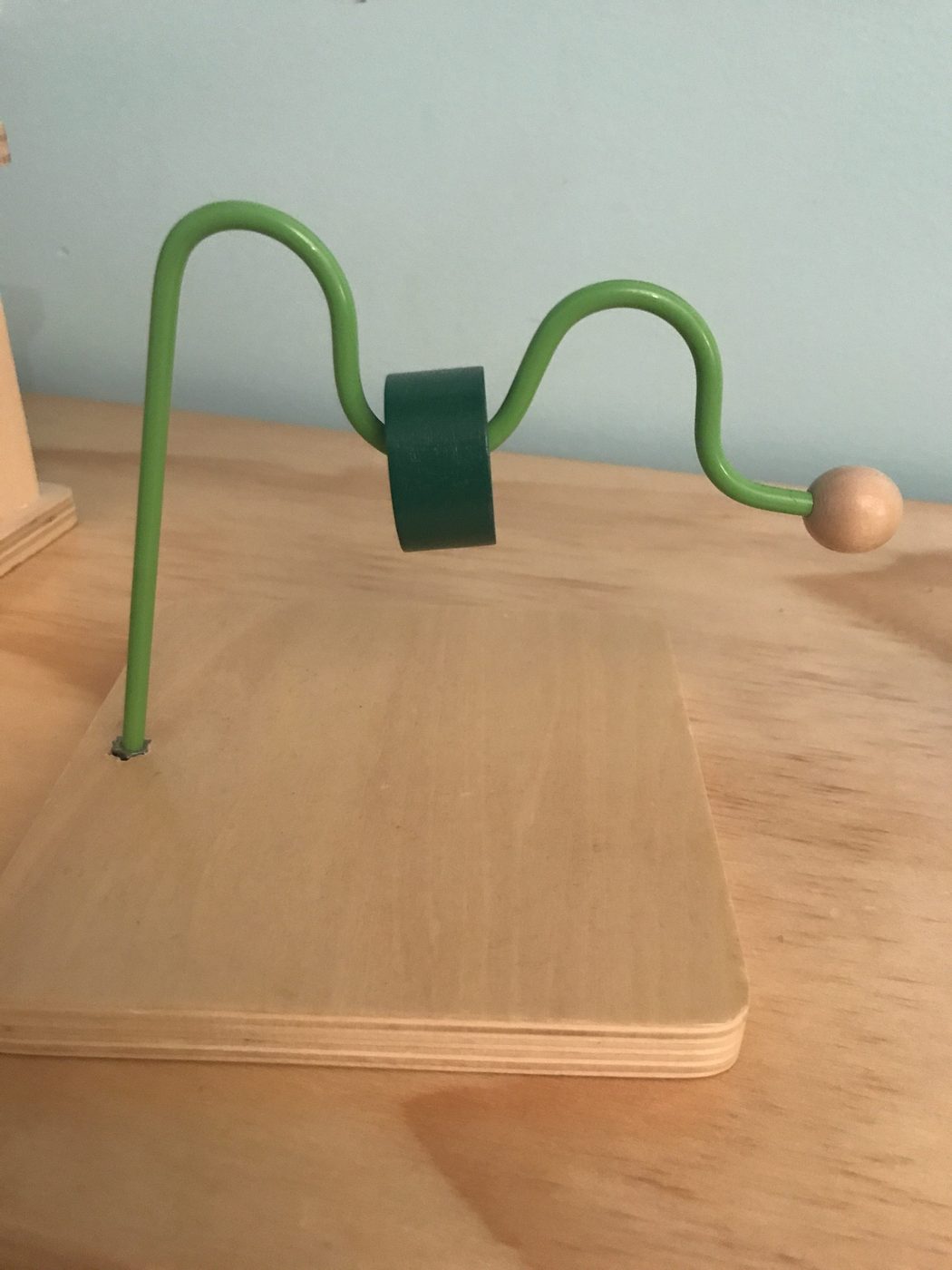
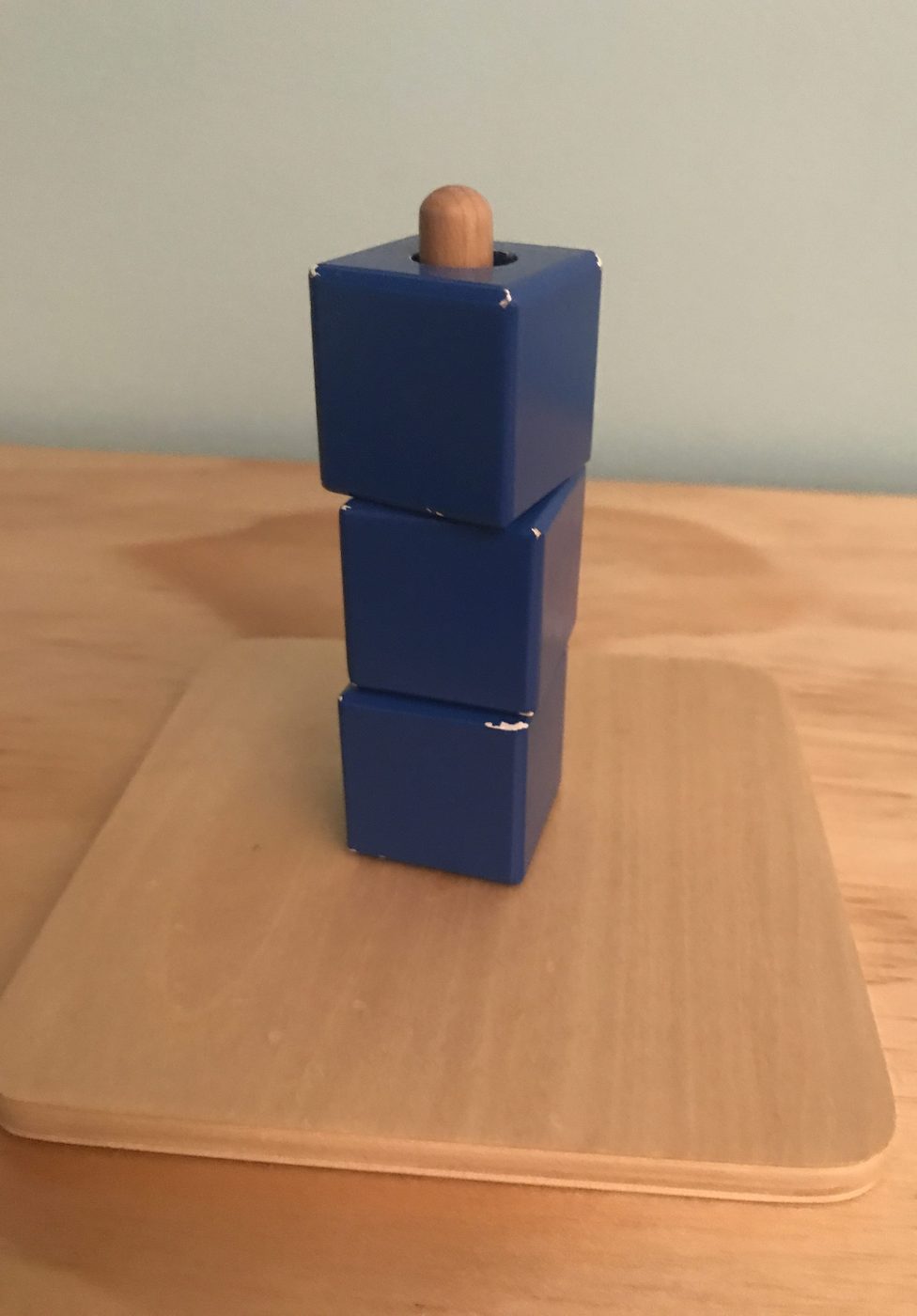
If you had to pick just a few Montessori materials for your 15 - 24 month old these would be some of my top choices. This set of Sensorial materials builds concepts of object permanence, fine motor skills from full hand grasping to pincer, opposites such as open/close and vertical/horizontal. Work with the materials is rich in descriptive language and early counting skills.
These works are widely available online. There are discount Montessori retailers, though I recommend quality sources. If you are looking for the best quality, Nienhuis Montessori and Gonzaga Arredi make their materials directly from AMI blueprints.
Less expensive options include Montessori n' Such and Kid Advance Montessori and FAC Montessori, the latter two available on Amazon.
Keep in mind that I purchased these for my son when he was a year old and he used them consistently for years. I have them carefully stored for my next child.
One: Object Permanence Box
Two: Coin Box
Three: Horizontal Serpentine Dowel
Four: Vertical Cube Posting
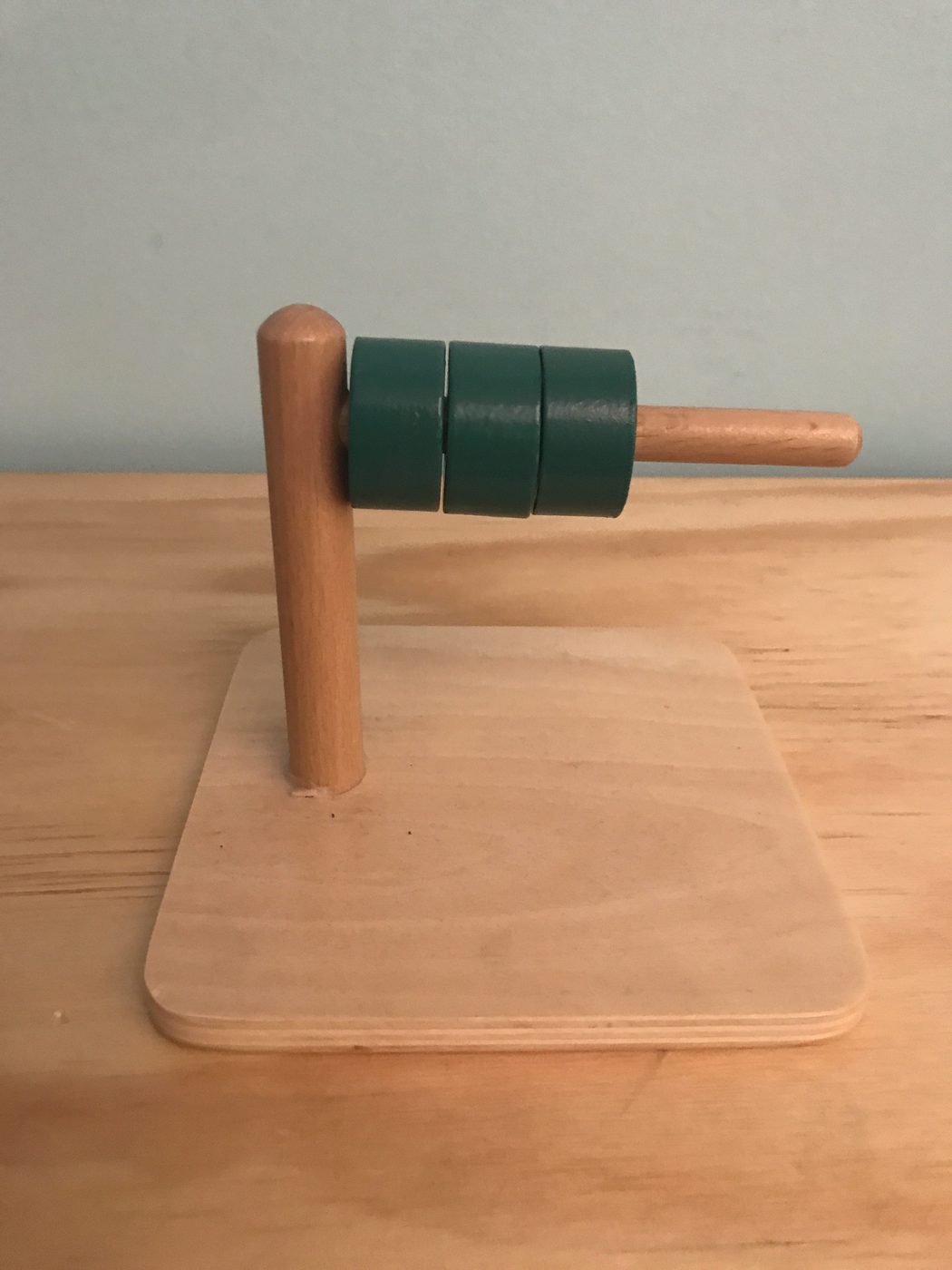
Five: Horizontal Ring Posting
We will break for the weekend. Next week we will discuss some DIY additions to the living room work shelf inspired by creative Montessori-at-home parents.