
We preschool teachers are settling into the year. The first month is over, it’s beginning to feel like fall. We have crossed the threshold once again; and as we all know there is no turning back.
As we move on through the ranks and files of weeks before us we’ll be uplifted, charmed, bewildered, honored – and certainly exhausted. We have in common, as Early Childhood Educators, the knowledge that we will all be tired to the core when this is year is finished.
To have this level of motivation, even on the days when progress seems to reverse, our confidence is shaken – and after being everywhere at once all day, we recognize all the things we’ve missed – we must believe on a fundamental level that our job is important.
It is. In a global collective agreement regarding Education For All, UNESCO (2000) stated, as the first line of the first objective, the need for “comprehensive early childhood care and education…” What’s more, the results of a wide body of literature point to teachers as the single most important factor in the quality of Early Childhood Programs.
There are many educational, psychological, and philosophical reasons why this is true. Since we’re back to school, and science has always my favorite subject, I’d like to conclude with some vivid pieces of substantiation for our chosen line of work from a new field (the one I’ve picked to study), namely, neuroeducation. Simply described, the field is the result of the recent intersection of education, psychology and neuroscience. (For a more thorough description of the field and its roots you can visit http://imbes.org.)
I have taken some artistic liberty with the pictures of the brain. To me, the vibrant images of our inner neural landscape are reminiscent of the fiery beauty of Autumn that is unfolding around us.
1) The brains of children between 2 and 5 are going through vital sensitive periods in their development (Fischer, 1994).
Kurt Fischer, founder and head of the country’s first degree program in Mind, Brain and Education at Harvard University, describes various neural growth spurts that children are experiencing during the early years. These periods are marked by both an advancement in sensory and motor skills, and an explosion of synaptic connections and myelination in the brain. Myelin is the coating around neurons that makes connections stronger and communication between neurons faster.

This picture shows neural connections in the cerebellum, an area of the brain responsible for motor control and sensory-motor integration that is undergoing massive development throughout early childhood. The flower llike formations, termed “rosettes” when first seen, are the sites where one neuron meets another. These synaptic connections are responsible for the complex sensory motor skills that are the foundation of cognitive development.
2) The years between 2 and 5 mark a time where brain development is strongly impacted by a child’s environment and the people in it (Kandel, 2000).
Eric Kandel is a pioneer in the understanding of how learning takes place in the developing brain. He has shown that the emergence of higher skills, such as language, depend not only on the biological development of cerebral areas specialized in function, but on social and emotional factors as well.

This picture shows the hippocampus, a seahorse shaped structure which is the center of learning and memory in the brain. It is here that LTP occurs, the process by which learning takes place. This process was first described on a neural level by Kandel. A child’s early sensory motor experiences help the brain reach a very important next level of experience beginning around age 3: The ability to represent objects, people, and events through mental symbols (Campos, 2010). As this important shift occurs, children begin to take in, store, and manipulate knowledge from their environment in a whole new way. Thus the quality of a child’s early environment and the experiences she has within it have a major impact on the way her brain learns throughout life.
3) It is precisely in early childhood where the foundations for all higher order functions, including memory, logical reasoning, and spatial and visual perception, lie (Gazzaniga, 2002).
Michael Gazzaniga is a leader in the field of Cognitive Neuroscience, considered the subfield of Neuroscience most closely related to education. He describes how the brain pathways, or tracks of interconnected neuron, responsible for higher order functions are laid down and “hardwired” early in life. For example the pathway responsible for hand-eye coordination finishes myelinating around age 4.
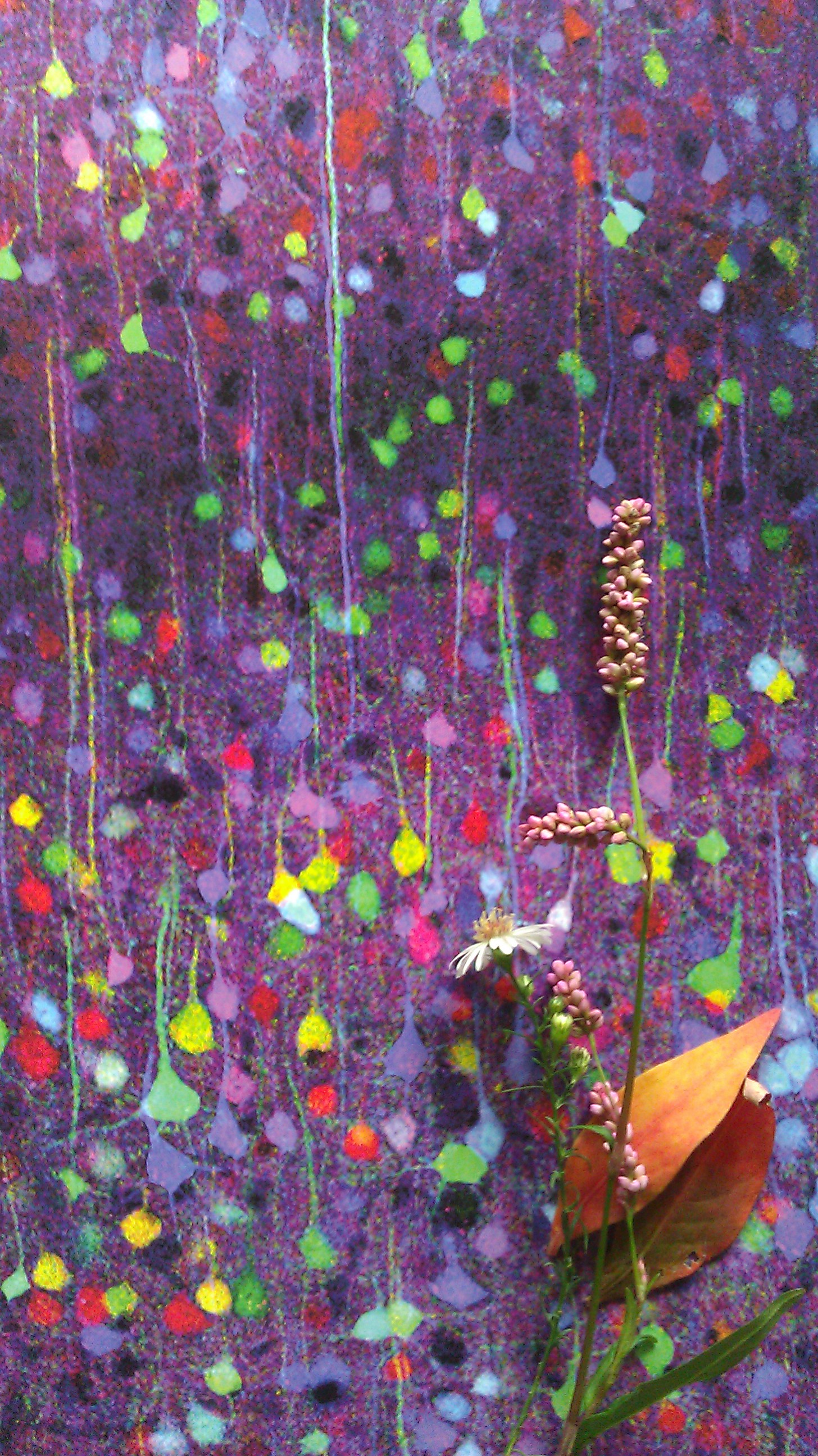
This picture shows layers of neurons in the cortex, the part of the brain that sets us apart from other mammals. This type of horizontal layering is found in areas of the cortex that underlie tasks such as processing visual information, planning motion and making rational decisions. These complex systems of neurons, set up and organized so early in life, are considered by Cognitive Neuroscientists to be the key to understanding how the brain makes us who we are.
References
Campos, A. L. (2010). Early Childhood: A Look From the Neuroeducation Perspective. Cerebrum (Ed.) Retrieved September 15th from www.childhoodportal.org/index.php?option=122%3Aearly-childhood-from- the-neuroeducation-perspective.
Fischer, K. & Rose, S. P. (1994). Dynamic development of coordination of components in brain and behavior: A framework for theory and research. In G. Dawson and K. W. Fischer (Eds.) Human Behavior and the Developing Brain, pp. 3-66. New York: Guilford Press.
Gazzaniga, M. S., Ivry, R. B., & Mangun, G. R. (2002). Cognitive Neuroscience (2nd edition). New York: WW Norton & Co.
Kandel, E. R., Shwartz, J. H., & Jessell, T. M.(2000). Principles of Neural Science (4th edition). New York: McGraw-Hill.
Pictures copied from:
Schoonover, C. (2010). Portraits of the Mind: Visualizing the Brain from Antiquity to the 21st Century. New York: Abrams.
Pic 1: Tamily Weissman, Jeff Lichtman and Joshua Sanes, 2007
Pic 2: Thomas Deerinck and Mark Ellisman, 2004
Pic 3: Tamily Weissman, Jeff Lichtman and Joshua Sanes, 2007
